
Aurora Property Assessment Records
Aurora property tax records span three different counties. This makes Aurora unique among Colorado cities. Adams County covers the northwest portion. Arapahoe County includes the central and eastern areas. Douglas County manages the southeastern edge. Knowing your county is essential. Your tax records live in different databases depending on location.
Aurora Quick Facts
Three Counties Manage Aurora Property Tax Records
Aurora stretches across county lines. This creates complexity for property owners. Three assessors handle Aurora homes. Adams County manages the northwest. Arapahoe County covers most of the city. Douglas County touches the southeast corner. Your address determines your county.
Most Aurora properties sit in Arapahoe County. This includes the city center. The mall area lies in Arapahoe. So do most neighborhoods. Adams County covers areas near Denver. These northwest neighborhoods use Adams records. Douglas County properties are few. They sit near the Cherry Creek Reservoir.
Each county uses different systems. They have separate websites. Their phone numbers differ. Protest deadlines align. Both use June 1 for filing. Values update on the same schedule. But databases do not connect. You must search each county separately. Always verify your county first.
Check your tax bill to find your county. The assessor name appears clearly. You can also call the city. Visit Aurora's official website for boundary maps. The city clerk can help locate your county. Do not guess based on zip code. Zip codes cross county lines often.
Adams County Property Tax Records for Aurora
Northwest Aurora falls under Adams County. The assessor there maintains these property records. This area includes neighborhoods near I-225. Some industrial zones sit here too. The assessor values these properties yearly. Notices go out each May. Owners can protest by June 1.
Contact the Adams County Assessor at 720-523-6038. Their office is at 4430 S Adams County Parkway in Brighton. Visit their Assessor page for online tools. You can search by address or schedule number. Results show current assessed values. Tax history appears for most properties.
Adams County provides online payment options. The treasurer accepts credit cards. E-checks cost less. First half taxes are due in February. Second half comes in June. Late fees apply after deadlines. Keep your receipts. You may need them for tax deductions. Lenders require payment proof too.
Arapahoe County Assessment Records for Aurora
Most Aurora homes sit in Arapahoe County. This county manages the bulk of Aurora tax records. The Arapahoe County Assessor handles over 200,000 parcels. Aurora makes up a large share. The assessor updates values every two years. Market conditions drive changes. Recent sales affect your value.
Call the Arapahoe County Assessor at 303-795-4600. Visit their official page for property searches. The office sits at 5334 S Prince Street in Littleton. Their online portal is comprehensive. You can search by address. Owner name searches work too. Parcel numbers give direct results.
The Arapahoe system shows detailed records. You can view assessment history. Payment status appears clearly. Building characteristics are listed. Square footage counts. Year built shows. Lot size is included. Photos appear for many properties. This helps verify assessments are correct.
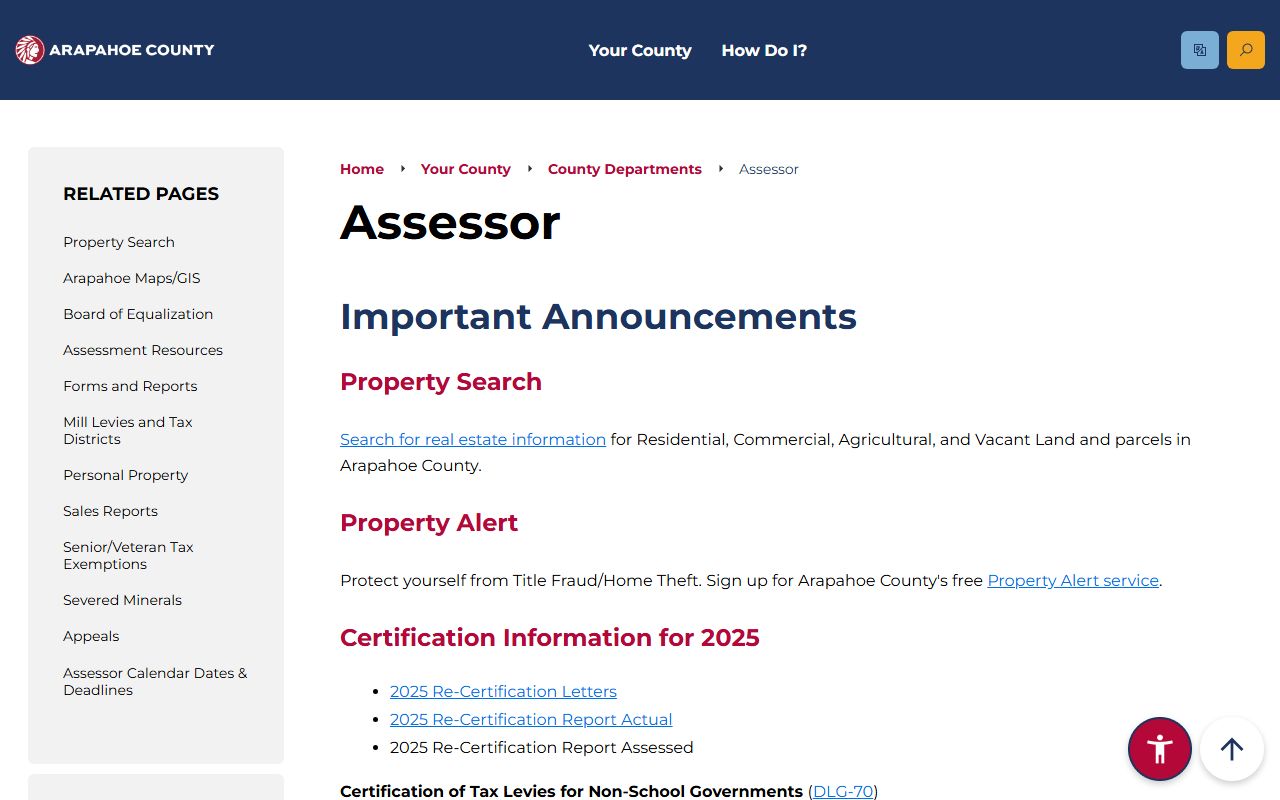
The Arapahoe County Assessor website provides comprehensive property search tools for Aurora residents.
Douglas County Property Tax Records for Aurora
A small slice of Aurora lies in Douglas County. This area sits near the reservoir. Fewer homes are affected here. Still, those owners need Douglas County records. The Douglas County Assessor manages these properties. Their system differs from the other counties. Values follow the same state rules.
Contact Douglas County Assessor at 303-660-7450. Visit their property assessment page for online access. The office is at 301 Wilcox Street in Castle Rock. Their website offers property lookup tools. You can find assessments by address. Owner searches are available too.
Douglas County uses similar assessment rates. Residential properties face 6.25%. Commercial rates hit 27%. Tax bills follow the same schedule. January notices arrive. February and June payments are due. Protest deadlines match other counties. June 1 is the cutoff date.
Note: Douglas County properties in Aurora are limited to areas near the southeastern city boundary.
How to Search Aurora Property Tax Records
Finding Aurora tax records starts with county identification. Check your most recent tax bill. The county name appears at the top. You can also search by address online. Most county sites have county lookup tools. Enter your street address. The system shows your county.
Once you know your county, visit the right website. Adams, Arapahoe, and Douglas each have portals. Create an account if needed. Some features require registration. Basic searches usually work without login. Enter your property address. Click search. Review your results.
Online records include key details. Current assessed value tops the list. Previous values show below. Tax payment history appears. Ownership records are public. Building details are included. Land values are separate from improvements. Total assessed value sums both parts.
Print your results for records. Save PDF copies if offered. These documents help with taxes. They prove payment history. Lenders may request them. Buyers want to see tax costs. Good records help sell homes. They also support protest cases. Keep files organized by year.
Understanding Aurora Property Assessment Values
Aurora property assessments follow Colorado state law. Values reflect market conditions as of January 1. The assessment date is fixed. Sales after that date do not count. Assessors look at comparable sales. They find homes like yours. Location matters. Size affects value. Condition plays a role too.
Residential properties use a 6.25% assessment rate. This applies to your actual value. A $400,000 home has a $25,000 assessed value. Mill levies apply to this number. Different districts charge different rates. Schools get the largest share. Cities and counties take portions too. Special districts add more.
Commercial properties face higher rates. The current rate is 27%. This includes apartments with four or more units. Office buildings pay this rate. Retail spaces do too. Vacant land also uses 27%. These higher rates balance the tax load. Residential owners pay less per dollar.
Values update every two years. Odd-numbered years bring new assessments. Your 2025 value stays until 2027. The assessor cannot change it mid-cycle. Markets may rise or fall. Taxes stay based on the old value. This creates predictability. Owners can budget for taxes.
Aurora Property Tax Exemptions and Programs
Several programs reduce Aurora tax bills. Senior citizens get the largest exemption. You must be 65 or older. Ten years of ownership is required. The home must be your primary residence. The exemption cuts half the value on the first $200,000. Savings often exceed $500 yearly.
Veterans with disabilities qualify too. You need 100% permanent disability. Service connection must be documented. You must own and occupy the home. The exemption matches the senior amount. Apply through your county assessor. Deadlines vary slightly by county. Most use July 1 for veterans.
Gold Star spouses are also eligible. This helps widows of fallen service members. The death must be service-connected. You cannot have remarried. Primary residence is required. The exemption amount is identical. These benefits honor sacrifice. They ease the tax burden.
Apply through your specific county. Adams County has online forms. Arapahoe County accepts paper applications. Douglas County offers both methods. Submit before July 15. Late applications get rejected. You must reapply if you move. Each property needs a new filing.
Appealing Aurora Property Tax Assessments
You can protest your Aurora assessment if it seems unfair. The process depends on your county. But deadlines are the same. June 1 is the protest cutoff. File earlier for best results. This gives time to gather evidence. Late filings are not accepted.
Start by reviewing your notice. Check the assessed value. Compare to similar homes. Look at recent sales nearby. Are you higher than comparable properties? Document differences. Note any problems. Roof issues matter. Foundation cracks reduce value. Outdated systems cost you.
File your protest with the county assessor. Each county has its own system. Adams County uses online portals. Arapahoe County offers similar tools. Douglas County accepts electronic filings. Include your evidence. State your requested value. Be reasonable. Extreme requests get denied.
The assessor reviews your case. They may lower your value. You will get a decision notice. If you disagree, appeal again. The County Board of Equalization hears cases. File by July 20. Present your evidence in person. The board decides by August. You can appeal further if needed.
Paying Property Taxes in Aurora
Aurora residents pay taxes to their county treasurer. Three counties means three different offices. Adams County handles northwest Aurora. Arapahoe County manages most payments. Douglas County covers the small southeast area. Tax bills arrive in January. They show the prior year's assessments.
Payment schedules align across counties. First half is due February 28. Second half comes due June 15. Some owners pay in full. Others split payments. Late fees apply after deadlines. Interest accrues daily. Do not delay payment. Even if protesting, pay on time.
All three counties offer online payments. Credit cards work everywhere. Fees vary by county. E-checks cost less. Mail payments are accepted. In-person service is available. County offices take cash and checks. Payment plans help some owners. Contact your treasurer for details.
County Resources for Aurora Property Tax Records
Aurora spans three counties. Each maintains separate records. You need the right county for your address. Adams County covers the northwest. Arapahoe County includes most homes. Douglas County handles a small area. All offer online tools. All have phone support.