
Colorado Property Tax Database
Colorado property tax records contain vital details about land and buildings across the state. The Colorado Division of Property Taxation oversees the assessment process for all 64 counties. Each county assessor maintains records of property values, tax payments, and ownership changes. You can search these public records online through county portals or request them directly from local assessor offices. Whether you need current assessment values or historical tax data, Colorado provides multiple ways to access property tax information.
Colorado Property Tax Quick Facts
Understanding Colorado Property Tax Records
Property tax records in Colorado serve as official documents that track the value and tax status of real estate. The state uses these records to fund local services. Schools, roads, and public safety all depend on property tax revenue. Every property owner in Colorado receives a notice of valuation each year. This notice shows the assessed value of their land and buildings. The assessor sets this value based on market conditions and property characteristics.
The assessment process follows rules set by the Colorado Division of Property Taxation. This state agency provides guidance to all 64 county assessors. They ensure fairness across the state. Colorado law requires assessors to value property as of January 1 each year. These values determine how much tax owners must pay. The tax bills arrive early in the year. Payment is due in two parts or all at once.
Most homeowners want to know their current assessment. They also need payment history. The state offers online tools for these searches. County websites host property search portals. You can look up any parcel in Colorado. Results show the owner name, assessed value, and tax status. Some counties provide maps and photos too.
You can visit the Colorado Division of Property Taxation website for state-level guidance. The division helps taxpayers understand their rights. They also train county assessors. The staff answers questions about exemptions and appeals. This resource proves valuable when you need help with complex tax issues.
Colorado Division of Property Taxation
The Division of Property Taxation operates under the Colorado Department of Local Affairs. This office sets standards for property assessments statewide. They publish manuals that county assessors must follow. The division also handles protests at the state level. Their work ensures uniform tax practices across Colorado.
The main office sits at 1313 Sherman Street in Denver. You can reach them by phone at 303-864-7777. Keith Erffmeyer serves as the Property Tax Administrator. His team oversees all assessment activities. They provide technical support to counties. They also audit county work for accuracy.
The Division of Property Taxation homepage offers access to forms and publications. Taxpayers can download exemption applications. They can also find appeal procedures. The site lists contact information for all county assessors. This makes it easy to reach local offices.
You can learn more about how taxes work by visiting the Understanding Property Taxes in Colorado page. This resource explains assessment rates. It breaks down how taxes get calculated. It also describes where tax dollars go. The page uses clear language that helps new property owners.
The state agency portal connects residents with essential tax tools and county contact directories.
Colorado Property Assessment Rates
Colorado uses different assessment rates for various property types. Residential properties carry lower rates than commercial ones. This system aims to balance the tax burden. Homeowners pay a smaller percentage of their property value. Businesses pay more per dollar of value. The state legislature sets these rates by law.
For 2025, residential properties face a 6.25% assessment rate for local government taxes. The school assessment rate sits at 7.05%. These rates apply to the actual value of the home. A $400,000 home would have an assessed value of $25,000 at the 6.25% rate. The tax bill depends on this assessed amount.
Commercial and industrial properties use a 27% assessment rate. This includes vacant land, lodging, and agricultural property. The higher rate reflects different policy choices. It also generates revenue for local budgets. Business owners should plan for this larger tax share.
Assessment rates can change. The legislature reviews them regularly. Taxpayers should stay informed about potential adjustments. Changes affect every property owner in Colorado. Local assessors notify taxpayers of any new rates each year.
Colorado Property Tax Payment Schedule
Property tax bills in Colorado follow a regular schedule. The assessor mails notices of valuation by May 1 for real property. Personal property notices go out by June 15. These notices show the new assessed value. They also explain how to protest if you disagree.
Tax bills reflecting the previous year's taxes arrive after January 1. Most counties mail them in January. The first half payment is due by the last day of February. The second half comes due on June 15. If the total tax is $25 or less, full payment is due April 30.
Many counties offer online payment options. You can pay by credit card or e-check. Some charge convenience fees. You can also pay by mail or in person. County treasurer offices accept checks and cash. Always keep proof of payment for your records.
Late payments incur interest and penalties. Colorado law sets these charges. The rates can add up quickly. It pays to pay on time. If you face hardship, contact your county treasurer. Some counties offer payment plans. These can help spread the cost over time.
Colorado Property Tax Exemption Programs
Colorado offers several programs that reduce property taxes for qualified residents. These exemptions lower the taxable value of homes. Seniors and veterans benefit most from these programs. The state funds these exemptions fully. Local governments do not lose revenue.
The Senior Citizen Property Tax Exemption helps those 65 and older. You must have owned and lived in your home for 10 years. The exemption covers 50% of the first $200,000 in actual value. This can save hundreds of dollars each year. Applications are due by July 15.
Veterans with a 100% permanent disability also qualify. They must have served on active duty. Their disability must be service-connected. They must own and occupy the property. Like the senior exemption, this covers 50% of the first $200,000. The deadline is July 1.
Gold Star Spouses of veterans who died in service may also apply. They must not have remarried. They must use the property as their main home. The exemption amount matches the other programs.
The state provides detailed exemption guidelines through the Senior and Veteran Exemptions portal.
How to Appeal Property Tax Assessments in Colorado
Property owners in Colorado have the right to protest their assessments. The process starts with the county assessor. You must file a protest by June 1 for real estate. The assessor reviews your case. They may adjust your value. They will send you a notice of determination.
If you disagree with the assessor's decision, you can appeal further. The County Board of Equalization (CBOE) hears these appeals. You must file by July 20. Some counties offer extended deadlines of September 15. The board holds hearings through the summer. They issue decisions by August 5 or November 1.
You have three options after the CBOE decision. First, appeal to the Board of Assessment Appeals at the state level. Second, file in district court. Third, choose binding arbitration. Each option has different rules. You must act within 30 days of the CBOE decision.
The Board of Assessment Appeals holds formal hearings. You can present evidence and testimony. New information may be introduced at this level. The board issues written decisions. These decisions can be appealed to court. Most cases resolve at this stage.
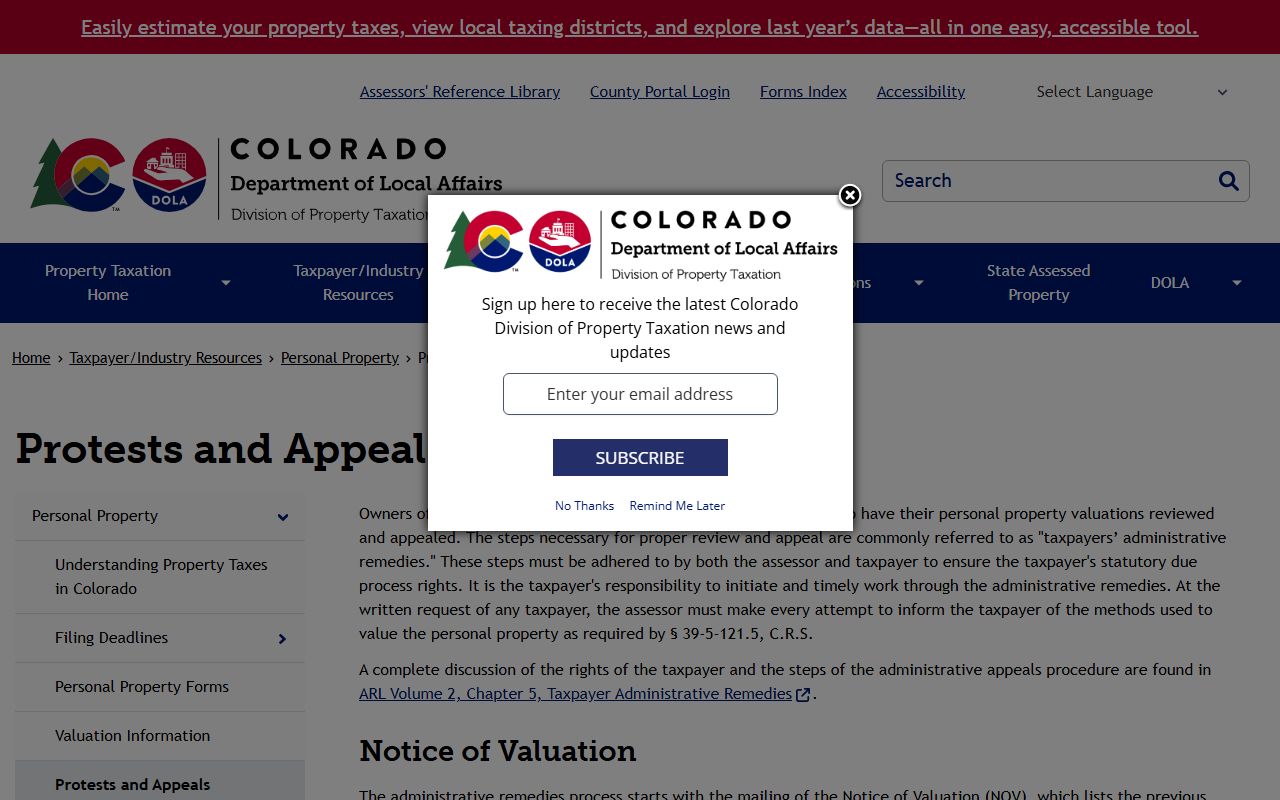
Visit the Protests and Appeals page for forms and detailed instructions on challenging your assessment.
Note: Keep copies of all documents you submit during the appeals process.
Accessing Colorado Property Tax Records Under CORA
The Colorado Open Records Act (CORA) guarantees public access to government documents. Property tax records fall under this law. You can request records from any county assessor or treasurer. Most requests receive a response within three working days.
CORA requests must be in writing. You can email or mail your request. Some counties offer online forms. Be specific about what you need. Include property addresses or parcel numbers. This helps staff locate records faster.
Agencies may charge fees for CORA requests. The first hour of research is free. After that, the rate is $41.37 per hour as of July 2024. Copies cost $0.25 per page. Electronic records have no per-page fee. You can request a cost estimate before they start work.
Some property records contain private information. Social Security numbers and financial account details may be redacted. This protects property owners from fraud. The rest of the record remains public. You can still get assessment values, ownership history, and tax payment status.
Colorado Property Tax Laws and Statutes
Property taxation in Colorado operates under Title 39 of the Colorado Revised Statutes. These laws define how assessments work. They set deadlines for protests and payments. They also create exemptions for special groups. Understanding these statutes helps taxpayers protect their rights.
CRS 39-1-104 covers valuation for assessment. It requires assessors to use fair market value. The statute bans discriminatory practices. All similar properties must receive similar treatment. This ensures equity across the state.
CRS 39-5-121 governs notices of valuation. Assessors must mail these by specific dates. The notice must explain how to protest. It must show the previous and current values. This gives taxpayers time to review their assessments.
CRS 39-10-103 addresses tax notice mailing requirements. Treasurers must send tax bills after January 1. Not receiving a bill does not excuse late payment. Property owners must pay even if the bill never arrives. This statute places responsibility on owners to know their tax obligations.
CRS 39-3-203 creates the Senior Citizen Property Tax Exemption. It sets age and residency requirements. The statute also establishes the exemption amount. Similar statutes cover veteran exemptions. These laws ensure consistent application across all counties.
Finding Property Tax Records by Colorado County
Each of Colorado's 64 counties maintains its own property tax records. The county assessor values all property in their jurisdiction. The county treasurer collects taxes. Both offices keep public records. You can contact them directly for assistance.
Larger counties offer robust online search tools. Denver, El Paso, and Jefferson counties have advanced portals. You can search by address, owner name, or parcel number. Results include current values, tax history, and payment status. Some systems show maps and building sketches.
Smaller counties may have simpler websites. Some require phone calls or office visits. The county seat hosts the assessor and treasurer offices. Most open Monday through Friday during business hours. Call ahead to confirm hours and required documents.
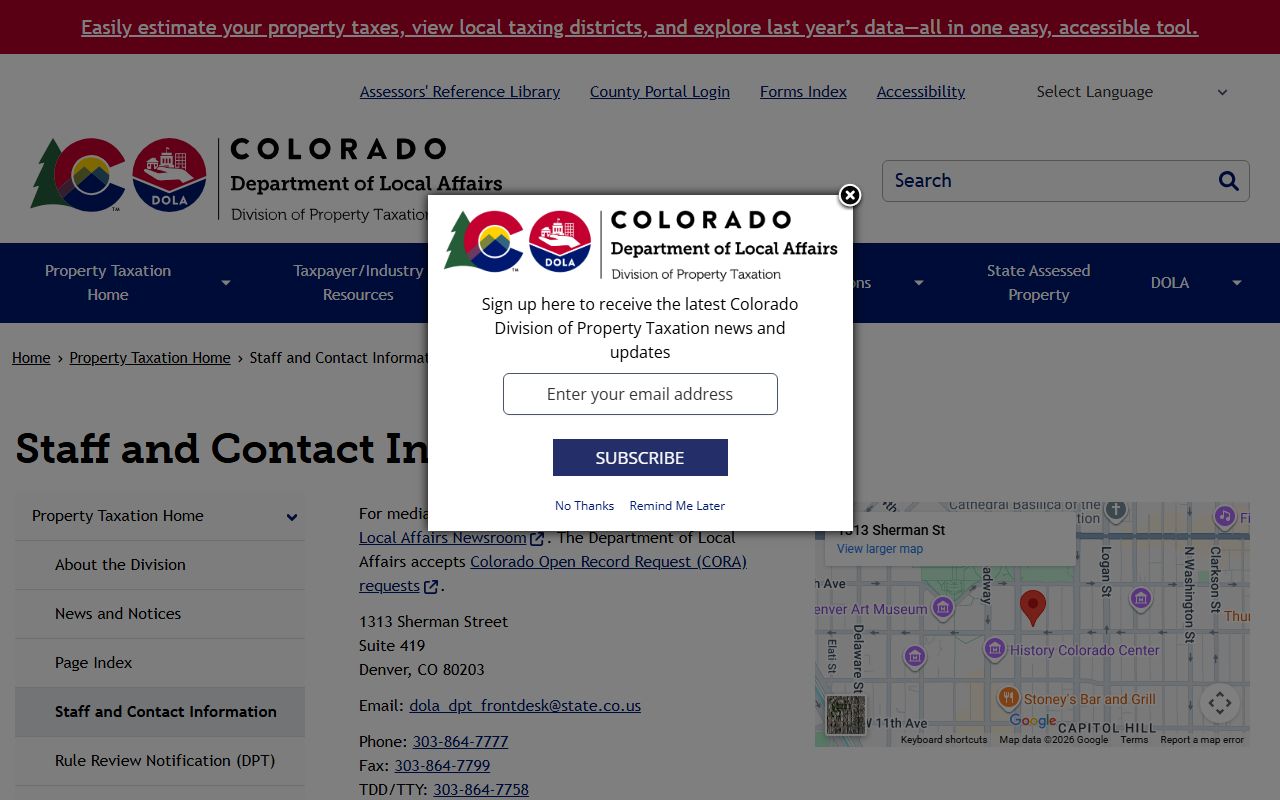
The staff and contact information page lists every county assessor's phone number and address for direct access.
Browse Colorado Property Tax Records by County
Each county in Colorado maintains separate property tax records. Select a county below to find local contact information and resources for property tax searches in that area.
Property Tax Records in Major Colorado Cities
Property taxes in Colorado cities are managed by county assessors and treasurers. Select a city below to learn about property tax records and resources in that area.