
Denver County Property Tax Search
Denver County property tax records are managed by the Treasury Division of the Denver Department of Finance. As Colorado's largest city and county, Denver serves over 729,000 residents. Starting January 2026, Denver no longer mails property tax statements. Property owners receive postcards with instructions to view and pay taxes online. You can search property tax records and make payments through the Denver property portal.
Denver County Quick Facts
Denver County Treasury Division
The Denver Treasury Division manages property taxes for the city and county. The office is at 201 W. Colfax Avenue, Department 1009 in Denver. You can reach them at 720-913-9300. Email questions to treasinfo@denvergov.org. Visit the Denver Property Taxes page for comprehensive information.
The Treasury Division handles all property tax collections. They process payments and manage accounts. They also administer tax relief programs. The office provides in-person service at the Taxpayer Services Center. Hours are Monday, Tuesday, Thursday, and Friday from 8:00 AM to 4:30 PM. Wednesday hours are 8:30 AM to 4:30 PM.
Denver property owners should know about the 2026 changes. The city no longer mails tax statements. You will receive a postcard instead. This change saves Denver about $100,000 annually. It also reduces paper waste. You must go online to view your statement.
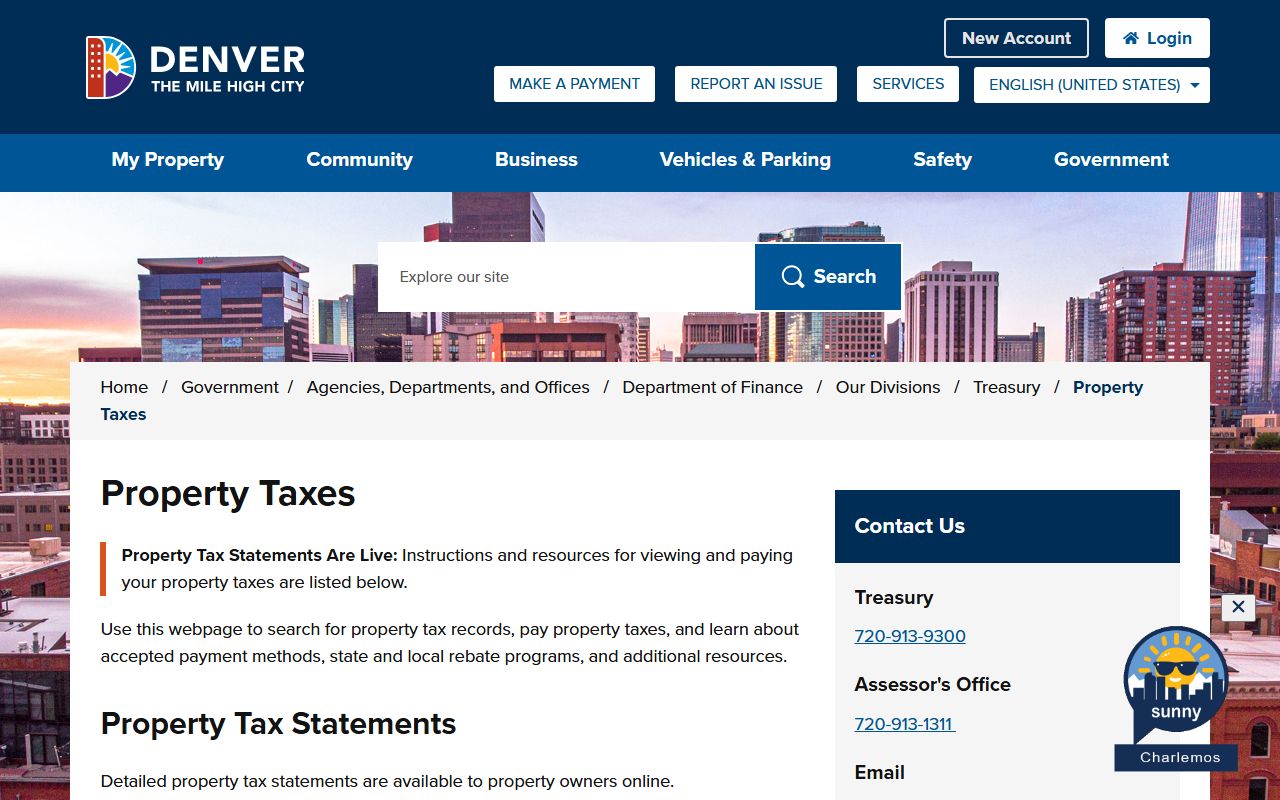
The Denver Treasury Division website provides comprehensive property tax information and payment options.
Search Denver County Property Tax Records
Finding property tax records in Denver is simple with their online portal. The Denver Property Search lets you look up any property in the county. You can search real property and business personal property. The system is free to use.
To view your property taxes in Denver, visit denvergov.org/property. Click on Real Property and enter your address. Scroll to the Tax Documents section at the bottom. Select the tax year to download your statement. You can also select Tax Payment at the top to pay online.
The Denver property search provides detailed information. You can view multiple years of statements. Digital copies are always available. This is more convenient than paper statements. You can access your records anytime.
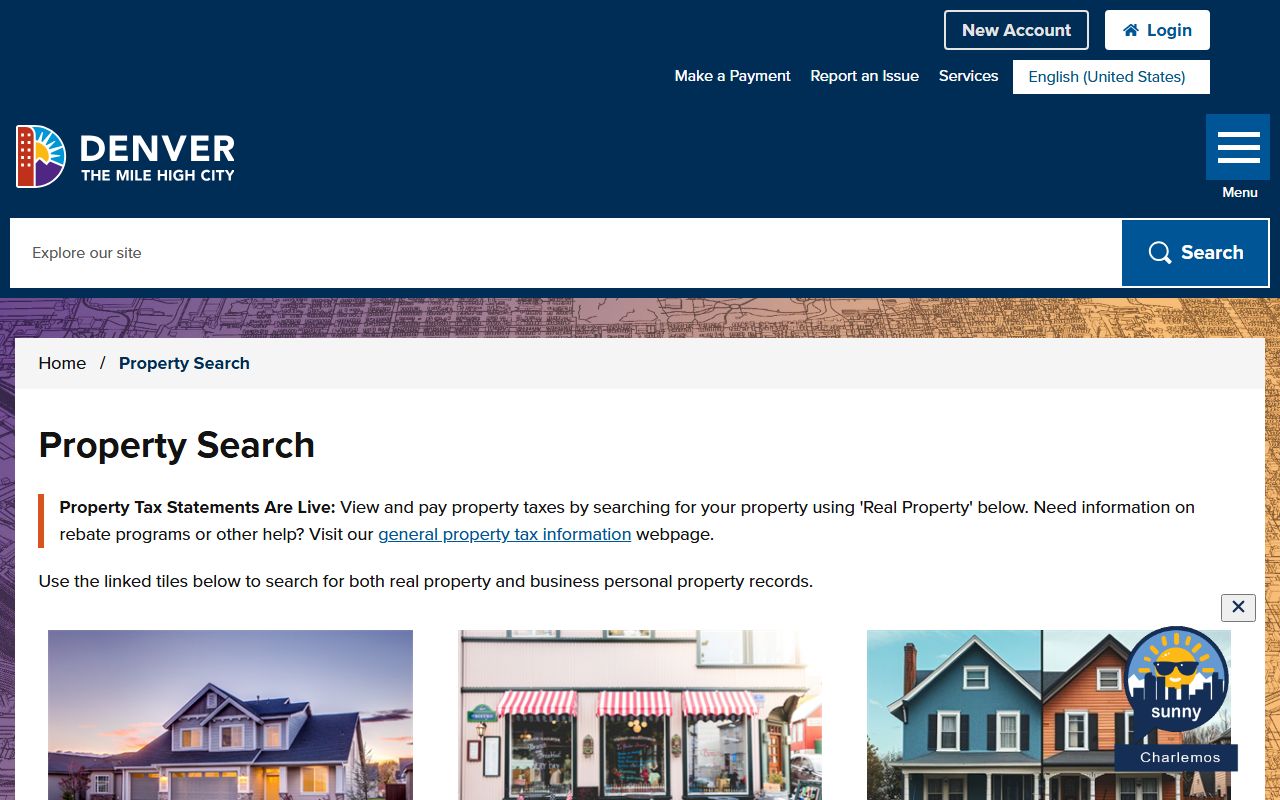
The Denver Property Search portal provides access to real property and business personal property records.
Denver County Tax Payment Options
Denver County offers multiple ways to pay property taxes. Online payment is available at denvergov.org/propertytaxes. You can pay by credit card or e-check. This is the fastest and most convenient method.
You can also pay by mail. Send checks or money orders to the Manager of Finance. The address is PO Box 17420, Denver, CO 80217-0420. Make checks payable to the Manager of Finance. Include your parcel number on the check.
In-person payments are accepted at the Taxpayer Services Center. The office is at 201 W. Colfax Avenue, First Floor. Hours vary by day. Check current hours before visiting. Bring cash, check, or card.
Visit denvergov.org/propertytaxes to pay property taxes online and learn about payment options.
Tax bills reflect the previous year's assessments. First half payment is due by the last day of February. Second half comes due June 15. Full payments under $25 are due April 30. Late payments incur interest and penalties.
Denver County Property Tax Relief Programs
Denver offers several property tax relief programs. These help low-income residents, seniors, and veterans. The programs reduce your tax burden. Some are administered locally. Others are state programs.
The Senior Citizen Property Tax Exemption is available for homeowners 65 and older. You must have owned and occupied your home for 10 years. The exemption covers 50% of the first $200,000 in value. Apply through the state by July 15.
Veterans with 100% permanent disability also qualify for exemptions. The disability must be service-connected. You must own and occupy the property. The exemption amount matches the senior program. Apply by July 1.
Denver also offers local tax relief programs. These include rebates and deferrals. Low-income residents may qualify. Visit denvergov.org/propertytaxes to learn more. You can apply for these programs online.
The Assessor's Office can be reached at 720-913-1311. They handle valuation questions and exemptions.
Denver County Assessment Appeals
You have the right to protest your Denver County property assessment. The process starts with the assessor. File your protest by June 1. Include reasons why your value is wrong. Comparable sales strengthen your case.
The assessor reviews all protests. They may adjust your value. You will receive a decision notice. If you disagree, appeal to the County Board of Equalization. The deadline is July 20. The board hears cases through summer.
After the CBOE, three options exist. First, file with the Board of Assessment Appeals. Second, go to district court. Third, choose binding arbitration. Each has different procedures. You have 30 days after the CBOE decision.
Visit the Colorado protests and appeals page for forms and instructions. Understanding the process improves your chances. Good documentation is essential.
Note: File your protest before the June 1 deadline to preserve your appeal rights.
Colorado State Resources for Denver County
The Colorado Division of Property Taxation oversees Denver County assessments. They set standards for all 64 counties. The division provides technical support. They audit county practices. Call 303-864-7777 for help.
Denver property taxes operate under Title 39 of the Colorado Revised Statutes. These laws define assessment procedures. They set protest deadlines. They create exemption programs. Knowing these laws helps protect your rights.
Assessment rates differ by property type. Residential uses 6.25% for local taxes. Schools use 7.05%. Commercial uses 27%. These rates apply to actual value. Your assessed value determines your tax bill.
Nearby Colorado Counties
Denver County is surrounded by several metro area counties. For property tax records in neighboring areas, check these counties: