
Fort Collins Property Assessment Records
Fort Collins property tax records are maintained by the Larimer County Assessor. The city is the largest in Larimer County. Over 169,000 people call it home. Colorado State University adds to the population. The assessor values thousands of parcels here. Residential and commercial areas both exist. Records are accessible online.
Fort Collins Quick Facts
Larimer County Assessor Property Tax Records
The Larimer County Assessor manages all Fort Collins property records. The office is at 200 W Oak Street in Fort Collins. This location is convenient for residents. You can visit in person. The assessor values property every two years. Fort Collins makes up a large portion. The university area adds complexity.
Contact the Larimer County Assessor at 970-498-7050. Visit their official page for online tools. The website offers a property search portal. You can look up assessments by address. Parcel number searches work well. Owner name lookups are available. Results show current and past values.
Larimer County provides detailed online records. You can view assessment history. Tax payment status appears clearly. Building characteristics are listed. Square footage is included. Year built shows on records. Lot dimensions appear. Photos are available for many properties. All this helps verify accuracy.
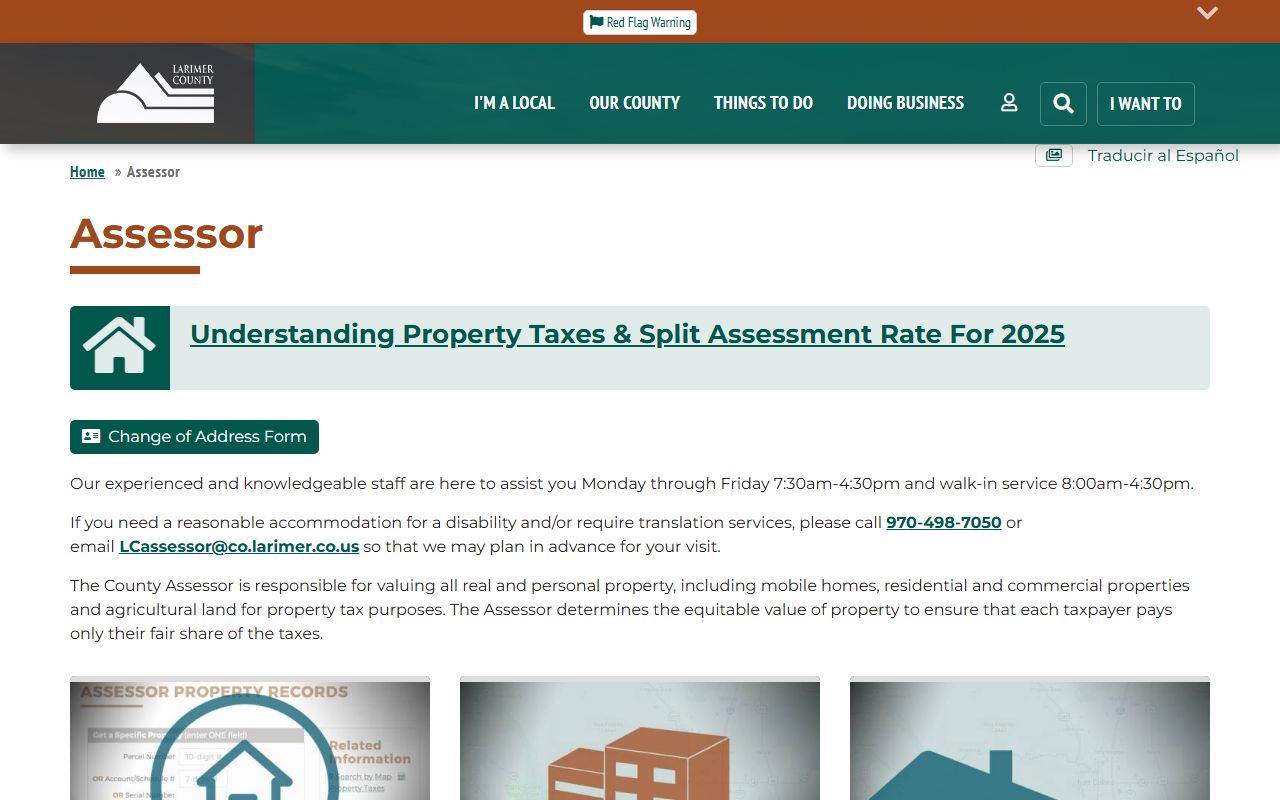
The Larimer County Assessor website provides comprehensive property search and assessment information for Fort Collins residents.
How to Search Fort Collins Property Tax Records
Searching Fort Collins tax records is straightforward. Start at the Larimer County website. Navigate to the assessor section. Click on property search. Enter your street address. The system finds your parcel. Results display instantly. You can also search by parcel number.
The online portal shows key information. Current assessed value appears first. This determines your tax amount. Actual value shows below. This estimates market worth. The assessment rate is applied. Residential properties use 6.25%. Commercial rates are higher.
Review your property details carefully. Verify the square footage. Confirm the year built. Check the lot size. Errors affect your value. Report mistakes to the assessor. They can correct records. This may lower your assessment. Accuracy benefits everyone.
Save your search results. Print pages or save as PDFs. Keep records for your files. You need them for taxes. Lenders may request them. Buyers want tax cost information. Good records help with protests. They prove your case. Stay organized.
Note: Fort Collins has unique zoning near the university that may affect property assessments.
Understanding Fort Collins Property Assessment Values
Fort Collins property values reflect the university influence. The presence of Colorado State University affects the market. Student housing has different values. Family neighborhoods vary. The assessor looks at comparable sales. Location affects value greatly. Proximity to campus matters.
Assessment dates are fixed by state law. Values reflect January 1 of the assessment year. This date never changes. Sales after January 1 do not count. Values update every two years. Odd-numbered years bring new assessments. Your 2025 value stays until 2027. Market shifts mid-cycle are ignored.
Residential assessment rates are 6.25%. This applies to actual value. A $450,000 home has a $28,125 assessed value. Mill levies apply to this number. Fort Collins has various tax districts. City taxes add to county taxes. Schools take a significant share. Special districts add more.
Commercial properties use 27%. This includes apartments with four or more units. Office buildings pay this rate. Retail spaces do too. Vacant land also uses 27%. These higher rates balance revenue. Residential owners pay less per dollar. The system spreads costs fairly.
Fort Collins Property Tax Exemptions and Programs
Fort Collins residents qualify for state exemptions. Senior citizens get significant relief. You must be 65 or older. Ten years of ownership is required. The home must be your primary residence. The exemption removes half the first $200,000 in value. This saves hundreds each year.
Disabled veterans qualify too. You need 100% permanent disability. Service connection must be documented. You must own and occupy the home. The exemption matches the senior benefit. Apply by July 1. Medical documentation is needed. Service records help.
Gold Star spouses may apply. This helps widows of fallen service members. The death must be service-connected. You cannot have remarried. Primary residence is required. The exemption amount is identical. These programs honor sacrifice. They ease financial burdens.
Apply through the Larimer County Assessor. Forms are available online. You can visit the Fort Collins office. Submit before July 15. Late applications are denied. You must reapply when moving. Each property needs a new filing. Keep copies of all documents.
Appealing Fort Collins Property Tax Assessments
You can protest your Fort Collins assessment. File by June 1 each year. This is the deadline for protests. Do not wait until the last day. Gather evidence early. Start when you receive your notice. The assessor reviews many protests. Early filing helps your case.
Review your assessment notice carefully. Compare to similar homes. Look at recent sales nearby. Are you higher than comparable properties? Document any differences. Note condition issues. System problems reduce value. Outdated features matter too. Photos help prove your case.
File your protest with the Larimer County Assessor. Online filing is available. Include your evidence. State your requested value. Be reasonable. Cite comparable sales. The assessor reviews everything. They may adjust your value. You will get a decision notice.
If you disagree, appeal further. The Larimer County Board of Equalization hears cases. File by July 20. Present your evidence in person. The board decides by August 5. You can appeal to state level. The Board of Assessment Appeals reviews these. You have 30 days to file.
Larimer County Treasurer Tax Payments
The Larimer County Treasurer collects Fort Collins property taxes. Tax bills arrive in January. They reflect the prior year's assessments. First half payments are due February 28. Second half comes due June 15. Some owners pay in full. Others prefer splitting payments.
Larimer County offers multiple payment options. Online payments work well. Credit cards are accepted. Fees apply for card use. E-checks cost less. Mail payments are fine. In-person payments work too. The Fort Collins office takes cash and checks. Payment plans may be available.
Late payments incur penalties. Interest adds up quickly. Colorado law sets the rates. Do not ignore tax bills. Pay even if protesting. You can get refunds later. Late fees are hard to remove. Protect your credit. Pay by the deadlines.
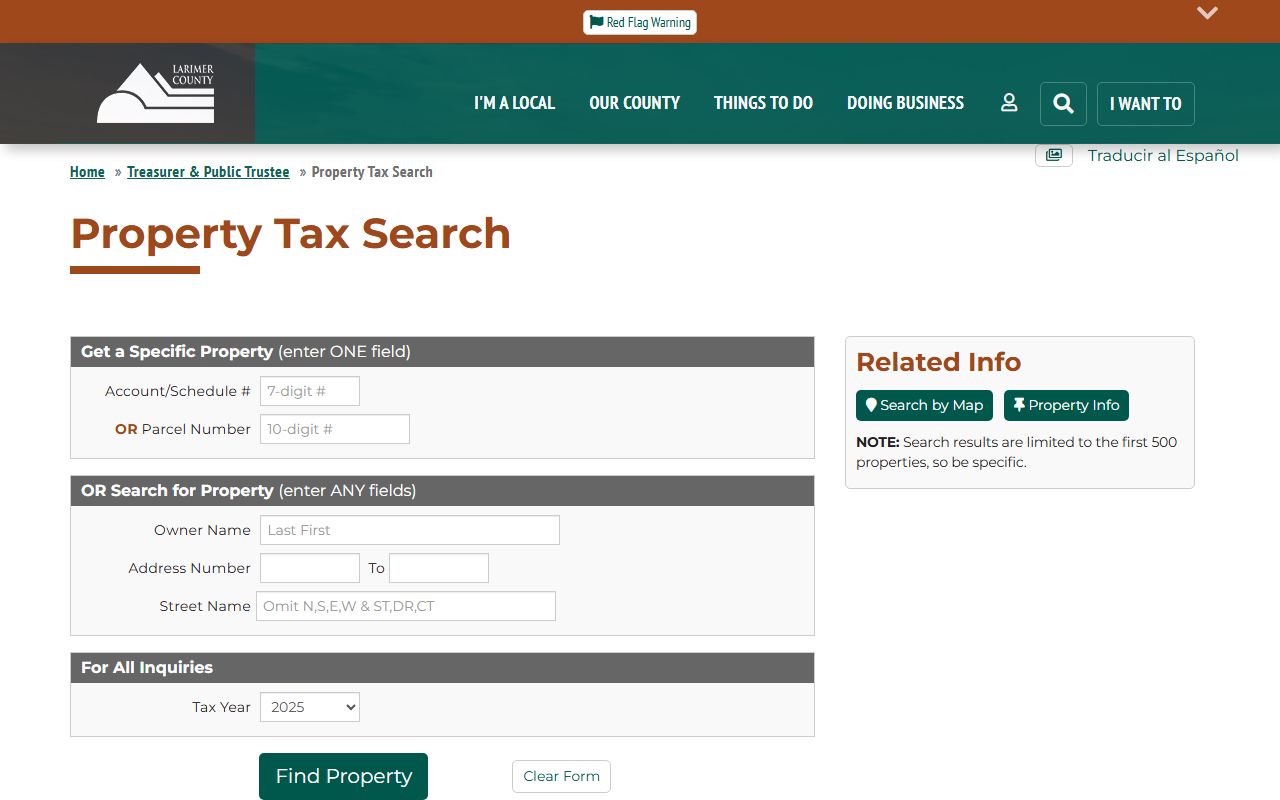
The Larimer County property tax search displays assessment details and payment information for Fort Collins properties.
City of Fort Collins Resources
The City of Fort Collins offers additional resources. Visit Fort Collins' official website for city services. The site lists departments clearly. You can find zoning information. Building permits are online. Business licenses are there too. These complement county tax records.
Fort Collins values sustainability. The city has green building programs. Energy efficiency matters. Some improvements affect values. Solar panels may increase assessments. But they also reduce energy costs. Consider this when reviewing records. Updates add value fairly.
The university influences the city. Student housing is common. Rental properties are numerous. Investment properties have special rules. The assessor values them fairly. Landlords should review records carefully. Rental income does not affect assessments. Only property value matters.
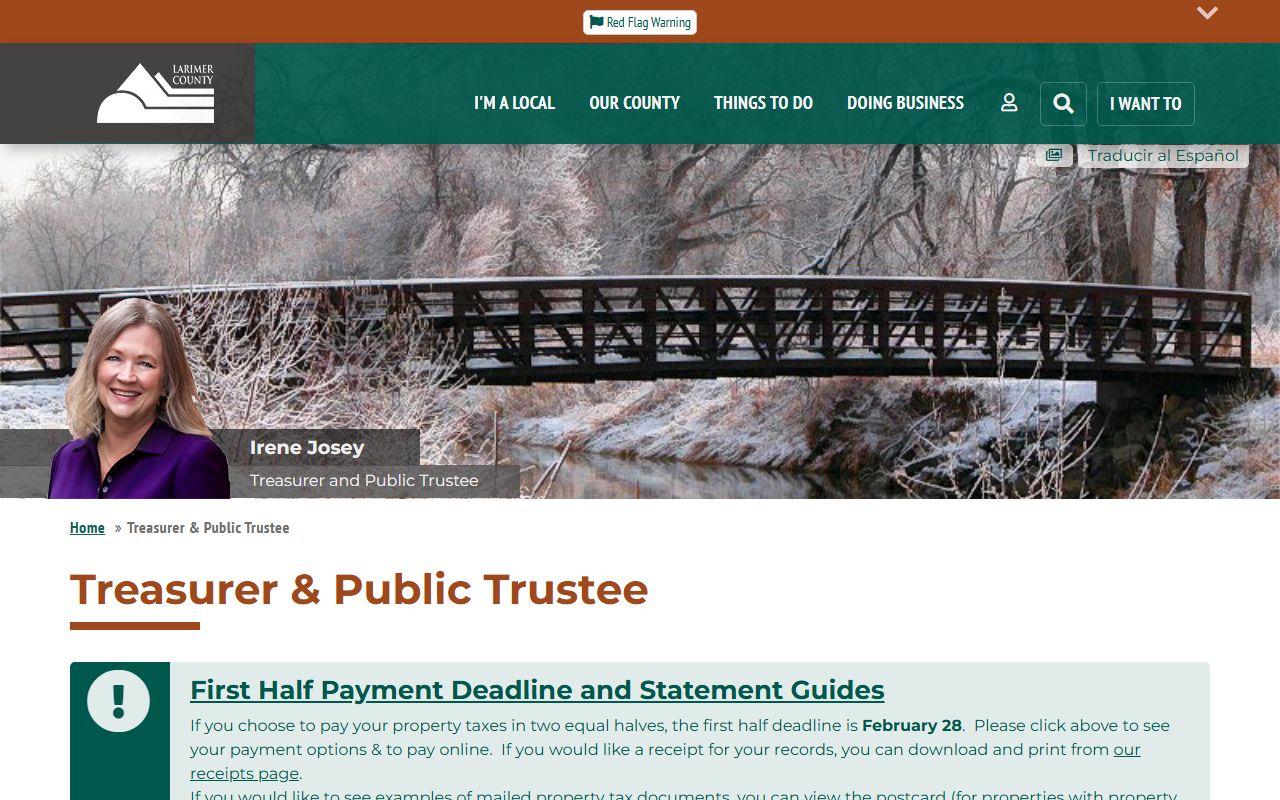
The Larimer County Treasurer website provides online payment options and tax bill information for Fort Collins property owners.
Larimer County Property Tax Records
Fort Collins sits entirely within Larimer County. All property tax records are managed by the county assessor. The county maintains comprehensive records for all Fort Collins properties. For more information about Larimer County assessments and resources, visit the county page.